
Tremors in the Blood: The Admissibility of Scientific Evidence Under Frye V. United States
Tremors in the Blood: The Admissibility of Scientific Evidence Under Frye V. United States, 293 f. 1013 (d.c. cir. 1923) by nigel malden
Summary
Frye v. United States is a landmark 1923 case from the Washington D.C. Court of Appeals which established the "general acceptance" or Frye test which still governs the admissibility of expert evidence and testimony in the state of Washington along with Evidence Rule 702.
Case Facts
James Alphonzo Frye was charged with second-degree murder. During his trial, Frye’s lawyer sought to introduce expert testimony from William Moulton Marston regarding a "systolic blood pressure deception test" which he argued helped prove Frye’s innocence.
Marston was a prominent American psychologist, inventor, and writer known for his role in the development of the early polygraph or so-called lie detector test. His theory was that when people lie during interrogation, they fear detection which raises their systolic blood pressure in a curve, matching “the struggle going on in their mind.”
Marston was prepared to testify that Frye’s blood pressure did not significantly change during an interview in which he denied any knowledge or participation in the crime which meant he was likely telling the truth.
The prosecution objected on the grounds that Marston’s theory, that a blood pressure device could reliably detect human deception, had no proven scientific basis. The trial court barred the expert testimony, Frye was convicted of second-degree murder, sentenced to 15 years behind bars, and appealed.
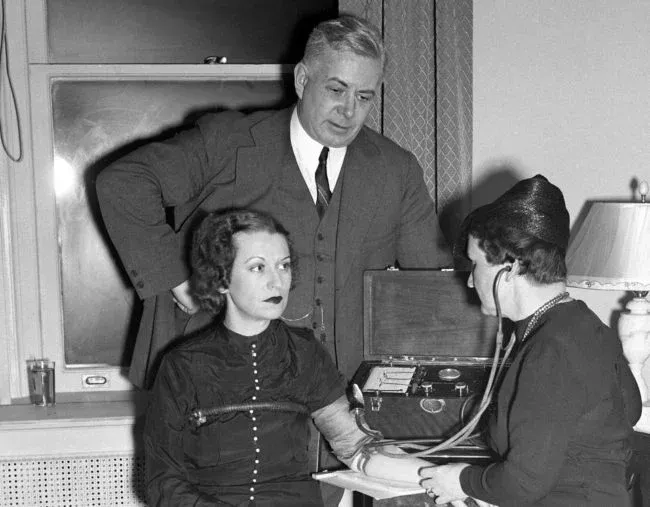
Frye expert, William Marston, and his wife, Elizabeth Holloway, testing an early polygraph device on a volunteer.
The Appellate Ruling
D.C. court of appeals Justice Josiah Alexander Van Orsdel wrote:
“While courts will go a long way in admitting expert testimony deduced from a well-recognized scientific principle or discovery, the thing from which the deduction is made must be sufficiently established to have gained general acceptance in the particular field in which it belongs. We think the systolic blood pressure deception test has not yet gained such standing and scientific recognition among physiological and psychological authorities as would justify the courts in admitting expert testimony deduced from the discovery, development, and experiments thus far made.”
Van Orsdel’s ruling did not mention another worrisome concern; if lie detector results were admissible in court, “the machine would likely supplant juries as the rational force that determined a person’s guilt or innocence,” and the judge in Frye’s trial had concluded that “juries are better suited to ‘determine whether or not a man is telling the truth."
Washington Still Follows Frye General Acceptance Test
The Frye general acceptance test remains the law in Washington and several other jurisdictions including California, Illinois, and New York.2 However, the federal courts and many state courts follow the stricter Daubert rule, as stated in Daubert v. Merrell Dow Pharmaceuticals, Inc., 509 U.S. 579 (1993), and Federal Rule of Evidence (FRE) 702.
The Daubert Rule
The Daubert rule requires that expert testimony be based on scientifically valid principles and reliable methods. The rule designates federal judges as gatekeepers who must protect the integrity of the judicial process by screening out unrerliable scientific or technical evidence oftenb referred to as “junk science.”
Federal trial judges are required to consider several factors to determine reliability, including whether the technique or theory can be tested, whether it has been peer-reviewed and published, the known or potential rate of error, the existence and maintenance of standards for its operation and whether the theory or technique is generally accepted by the relevant scientific community.
Federal Rule of Evidence 702, which governs the admissability of expert evidence and testimony in the federal courts, was amended in 2000 to incorporate Daubert.
Federal Rule of Evidence 702. Testimony by Expert Witnesses
A witness who is qualified as an expert by knowledge, skill, experience, training, or education may testify in the form of an opinion or otherwise if the proponent demonstrates to the court that it is more likely than not that:
(a) the expert’s scientific, technical, or other specialized knowledge will help the trier of fact to understand the evidence or to determine a fact in issue;
(b) the testimony is based on sufficient facts or data;
(c) the testimony is the product of reliable principles and methods; and
(d) the expert’s opinion reflects a reliable application of the principles and methods to the facts of the case.
Compare the simpler and less onerous Washington Evidence Rule 702:
ER 702. Testimony by Expert Witnesses (State Rule)
If scientific, technical, or other specialized knowledge will assist the trier of fact to understand the evidence or to determine a fact in issue, a witness qualified as an expert by knowledge, skill, experience, training, or education, may testify thereto in the form of an opinion or otherwise.
Reliability and Admissibility of Moden Day Polygraph Evidence
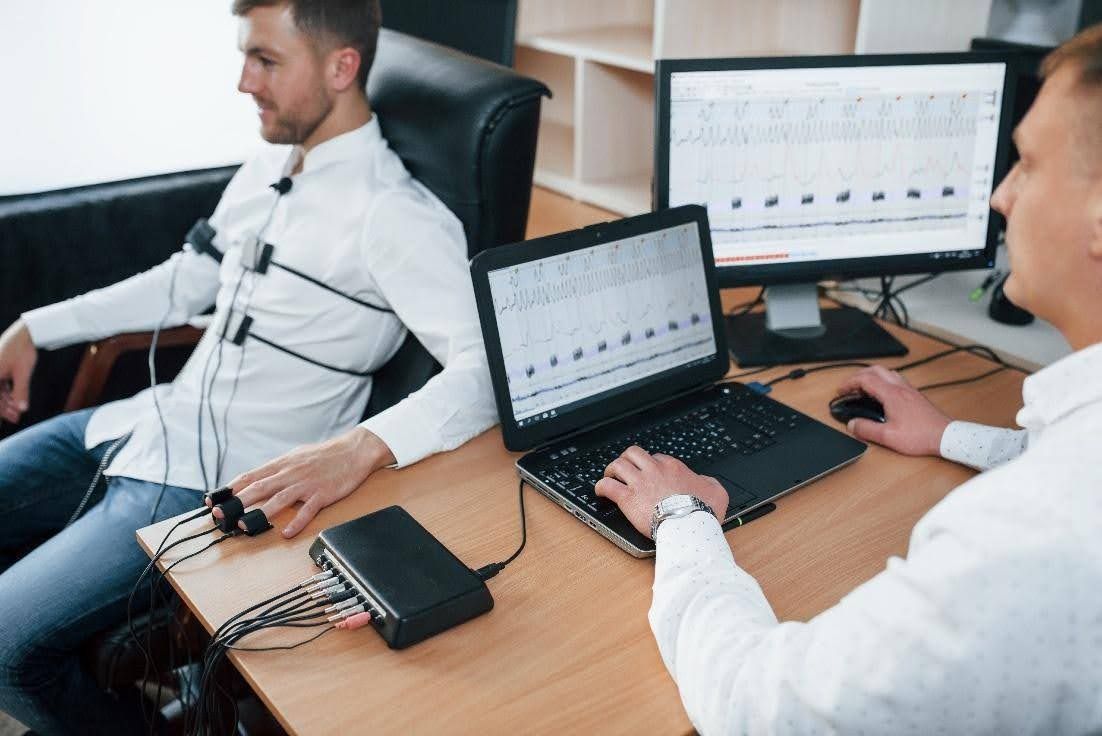
A modern day polygraph which monitors blood pressure, breathing, galvanic skin response (perspiration), and several other data points. Image credit: Shutterstock
A modern day polygraph is a device or procedure that measures and records a subject’s blood pressure, breathing, pulse, respiration, and skin conductivity (perspiration) while they answer a series of questions. The belief underpinning the use of the polygraph remains that deceptive answers will produce physiological responses that can be differentiated from those associated with non-deceptive answers; however, there are no specific physiological reactions associated with lying, making it difficult to identify factors that separate those who are lying from those who are telling the truth.
Factors affecting accuracy
- Examiner skill: The experience and training of the examiner can significantly impact the accuracy of a test.
- Questioning technique: Poorly formulated questions can lead to inaccurate results.
- Physiological responses: Lie detectors measure physiological responses like blood pressure, heart rate, and perspiration, which can be affected by anxiety or stress, even in truthful individuals.
- "Countermeasures": Individuals can be trained to manipulate their physiological responses to "beat" the test, such as by tensing muscles or altering breathing.
- Subject's state: An innocent person who is stressed or anxious about the test may appear deceptive, while a guilty person who is a "psychopath" might show no reaction to lying.
How are polygraph tests used?
Polygraph tests have historically been used in criminal investigations as well as in employment screening for jobs and security clearances. Although a 1988 law prohibits most private-sector employers from using polygraphs, polygraph testing is still used in employment screening and testing by federal, state, and local law enforcement agencies.
In addition, law enforcement agencies use polygraph tests in criminal cases, to verify the truthfulness of suspects, witnesses, and complainants; and sex offender treatment programs use polygraph tests to evaluate treatment progress and compliance.
About half of U.S. states allow polygraph evidence to be used in court cases when both parties agree to it, and one state (New Mexico) allows it without both parties agreeing.
The general rule, followed almost without exception since Frye v. United States, 293 F. 1013 (D.C. Cir.1923), is that the results of a polygraph examination are inadmissible at trial. Polygraph results are generally inadmissible in Washington state courts, as they have not been generally accepted as a scientifically reliable method for evidence. This inadmissibility means a prosecutor cannot use polygraph results to bolster their case, nor can a defense attorney try to use them to impeach a witness.
In the 1998 US Supreme Court case United States v. Scheffer, 523 U.S. 303 (1998), the majority stated:
"There is simply no consensus that polygraph evidence is reliable (and) unlike other expert witnesses who testify about factual matters outside the jurors' knowledge, such as the analysis of fingerprints, ballistics, or DNA found at a crime scene, a polygraph expert can supply the jury only with another opinion."
In 2005, the 11th Circuit Court of Appeals stated that "polygraphy did not enjoy general acceptance from the scientific community".
However, results can be admitted if both parties enter a written stipulation agreeing to their admissibility, which must be done before the exam is taken. There are also limited circumstances, such as within parole revocation hearings, where the results may be admissible without stipulation if the parties agree and the board finds the examiner qualified and the test conditions proper.
Limitations and reliability
Although lying can cause the physiological responses measured by polygraph machines—such as sweating and increased heart rate—those same changes can occur even when people are not lying, for example when they are nervous. So, while polygraph tests might be able to detect deceit, they also may have a high error rate.
Inconclusive results: It is possible to get inconclusive results rather than a definitive "lying" or "truthful" result.
https://yalelawjournal.org/essay/on-evidence-proving-frye-as-a-matter-of-law-science-an d-history
What are the different forms of polygraph tests?
The most widely used polygraph method is the comparison-question technique (CQT), first developed in 1947. The CQT compares subjects’ physiological responses to three different types of questions: Those relevant to an investigation (e.g. “Did you kill your spouse?”); neutral (irrelevant) questions designed to get a baseline pattern of physiological responses; and questions about past behavior that are not relevant to the investigation but are designed to elicit lies (e.g. “Have you ever betrayed someone you love?”). The idea is that a guilty person will have a stronger response to the investigation-relevant questions, while an innocent person will have a stronger response to the control questions designed to elicit lies.
Another polygraph method is the concealed-information technique (CIT), also known as the guilty knowledge test. This test assumes that only someone guilty will show arousal when lying about a fact that is not known to the public, such as the specific murder weapon used in a crime.
Sources
Paul C. Giannelli, Polygraph Evidence: Post-Daubert, 49 Hastings Law Journal 895 (1998).
Thomas L. Bohan, Scientific Evidence and Forensic Science Since Daubert: Maine Decides to Sit Out on the Dance, 56 Maine Law Review 102 (January 2004).
Jim Hilbert, The Disappointing History of Science in the Courtroom: Frye, Daubert, and the Ongoing Crisis of “Junk Science” in Criminal Trials, 71 Oklahoma Law Review 759 (2019).
Carrie Leonetti, Abracadabra, Hocus Pocus, Same Song, Different Chorus: The Newest Iteration of the "Science" of Lie Detection, 24 Richmond Journal of Law & Technology 1, (2017)
Federal Rule of Evidence 702-- Judicial Conference Amends Rule 702, 138 Harv. L. Rev. 899 (2025)
Kenneth J. Weiss, Clarence Watson, and Yan Xuan Frye's Backstory: A Tale of Murder, a Retracted Confession, and Scientific Hubris, Journal of the American Academy of Psychiatry and the Law Online 42 (2) 226-233 ; June 2014.
Kirstin Butler, He Met His Wife Over a Lie Detector. Then Things Got Interesting. December 22, 2022.
The Lie Detector | AMERICAN EXPERIENCE | PBS | Trailer: https://youtu.be/vYwLpCEl8Cg
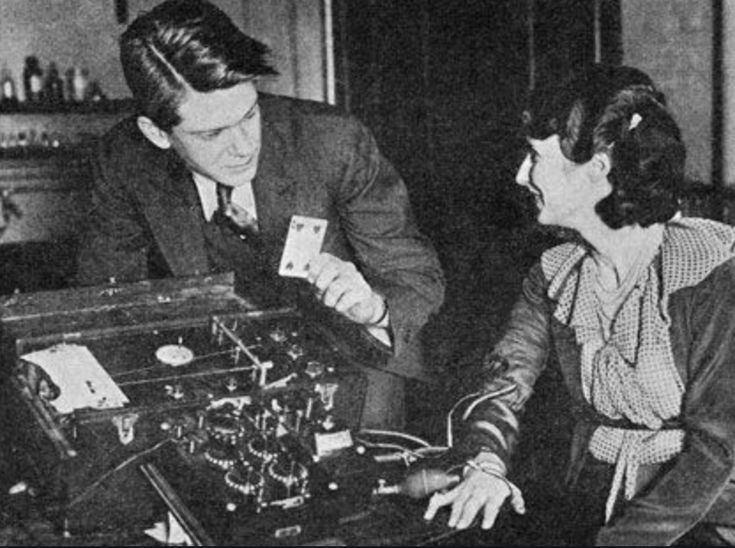
Leonarde and Katherine Keeler pose with the Keeler Polygraph machine, 1935.